
Fresh-food warm, freezer fine
Classic split symptom on our Sub-Zero in Five Canyons. He found a frosted evaporator and a slow fan instead of jumping to the sealed system, and the fresh-food side was back at 38 within hours.
Angela P. — Five CanyonsNot-cooling hub / Five Canyons
4.9/5700+ reviews across platformsCastro Valley Sub-Zero Appliance Repair starts a warm Castro Valley built-in by logging fresh-food and freezer temperatures, then checking condenser airflow, the evaporator fan and gasket sealing before any compressor theory; in Green Ridge and around 94546 hillside dust often reads as failure. Food warming fast? Reach a technician at (510) 390-9712.
A Sub-Zero not cooling in Five Canyons or Castro Valley foothill homes should be checked for airflow, condenser dust, fan or sensor faults, gasket leaks and sealed-system evidence in that order. The first useful step is to record fresh-food and freezer temperatures, preserve any alarm state and have cabinet context ready before a part or compressor theory is discussed.
Customer reviews
Review signal from the wider appliance repair service network: 700+ customer reviews across platforms with a 4.9 average rating. Visible themes emphasize accurate Sub-Zero diagnosis, same-day routing when route capacity allows, careful cabinet protection and factory-authorized Sub-Zero OEM parts when replacement parts are needed.
Classic split symptom on our Sub-Zero in Five Canyons. He found a frosted evaporator and a slow fan instead of jumping to the sealed system, and the fresh-food side was back at 38 within hours.
Angela P. — Five CanyonsLong run times after warm afternoons turned out to be a packed condenser, not a dying compressor. He cleaned it, verified head pressure behavior, and saved us a needless major repair.
Marcus L. — Lake ChabotHe wouldn't quote a compressor without proof. He ran the temperature and frost-pattern tests first, documented everything, then explained exactly what the next step would cost if it came to that.
Renee G. — Crow CanyonWhat this means
Sub-Zero not cooling in Castro Valley is a pattern question first. Fresh-food warm while freezer holds usually sends the technician toward airflow, evaporator fan, thermistor, defrost or gasket checks. Both compartments warm adds condenser airflow, control behavior, compressor operation and sealed-system verification. A freezer warm first may point toward fan, defrost or refrigerant-side evidence, but it still needs measured proof.
Five Canyons and Palomares Hills homes add one local twist: tight built-in installations and hillside dust can make airflow problems look like deeper mechanical failure. That does not mean every foothill call is a dust call. It means condenser access, cabinet clearance and a full-appliance photo should be part of the first diagnostic branch.
Symptom table
Match what you see to the first useful check and when it is worth calling quickly.
| What homeowner sees | What it often means | First useful check | When to call quickly |
|---|---|---|---|
| Fresh-food warm, freezer cold | Airflow, evaporator fan, thermistor, defrost or gasket | Record both temperatures and listen for airflow | Food above safe range or temperature climbing |
| Both sections warm | Power, control, condenser, compressor behavior or sealed-system issue | Check power/settings/door closure and photograph display | Same day if food is warming |
| Frost line at door | Gasket, hinge, panel alignment or warm-air intrusion | Photo of full door and frost line | Moisture reaches flooring or cabinet |
| Alarm after reset | Sensor/control or true temperature issue | Photograph alarm before reset | Alarm returns or cabinet warms |
| Warm after cabinet remodel | Airflow restriction or changed clearance | Wide cabinet and lower grille photo | Temperatures continue rising |
Planning ranges and diagnostic paths are not final quotes; final scope depends on model and serial number, cabinet access, part availability and measured evidence.
Local notes
Local factors are useful only when tied to a test.
| Local factor | How it can show up | Technician test | Do not assume |
|---|---|---|---|
| Foothill dust | Long run time or warm cabinet area | Condenser and fan inspection | Compressor failure without airflow proof |
| Tight panel-front cabinetry | Slow recovery after door use | Clearance, reveal and airflow path check | Sealed-system failure from appearance |
| Fog and humidity cycles | Visible condensation or frost line | Gasket contact and door plane check | Bad gasket without alignment test |
| Older Green Ridge opening | Restricted toe-kick or legacy ventilation | Cabinet opening and grille review | Modern part fit without model number |
| Recent remodel | Warmth after new floor, trim or panel work | Pull/reseat safety and airflow verification | Appliance-only diagnosis |
Planning ranges and diagnostic paths are not final quotes; final scope depends on model and serial number, cabinet access, part availability and measured evidence.
Urgency table
Safety comes first; evidence comes second.
| Temperature pattern | Owner-safe step | Typical timing | Evidence to preserve |
|---|---|---|---|
| Food above safe storage range | Move perishable food to backup cooling | Same day or first available | Display photo and time of reading |
| Stable but warm fresh-food section | Record trend and avoid repeated resets | Priority diagnostic | Both temperatures and model tag |
| Freezer softening | Protect frozen food and document timing | Urgent | Freezer reading and alarm photo |
| Alarm only, temperatures stable | Photograph alarm and monitor readings | Scheduled diagnostic | Alarm state and model number |
| After cleaning or reset | Note exact action and time | Depends on temperature trend | Before/after temperatures |
Planning ranges and diagnostic paths are not final quotes; final scope depends on model and serial number, cabinet access, part availability and measured evidence.
Photo requirements
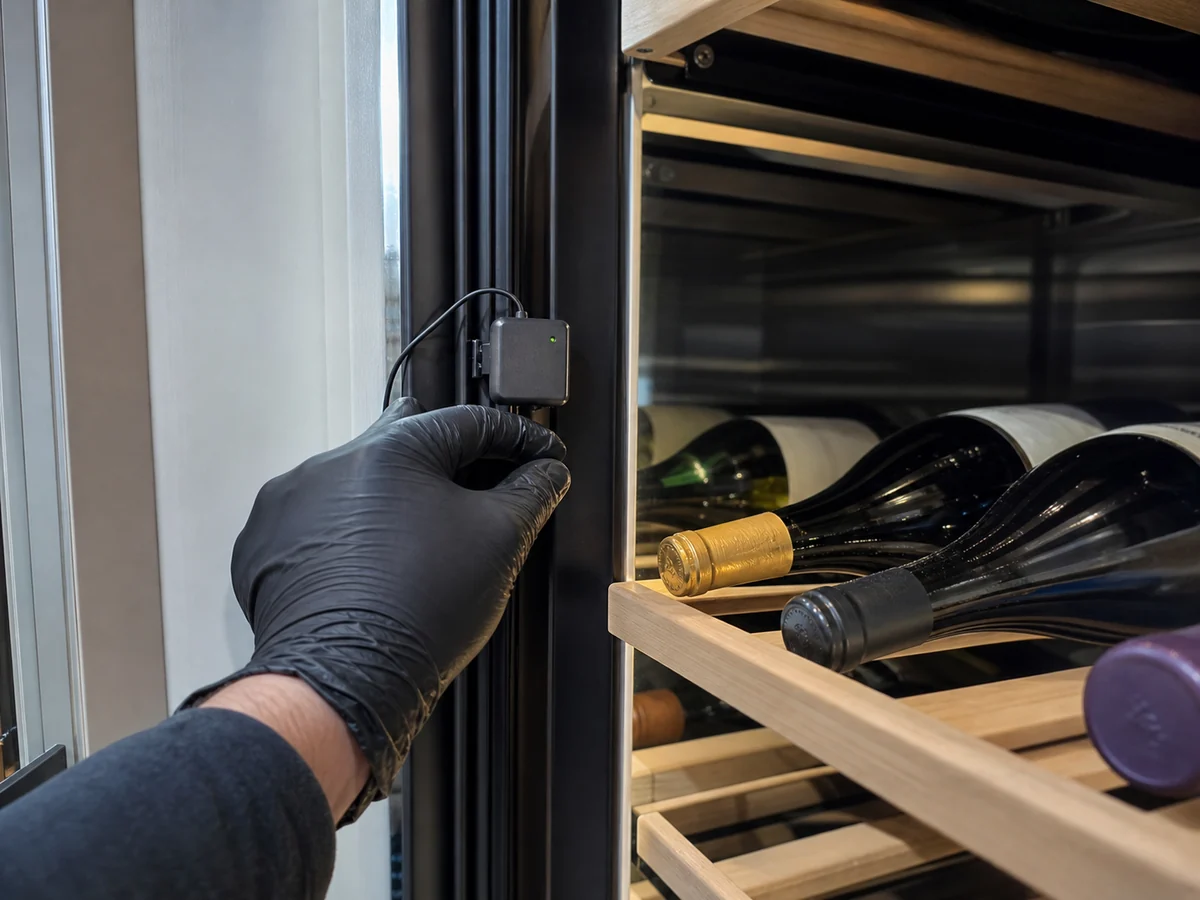
Close-up evidence plus full appliance context beats a generic complaint.


Price and time
The price changes when a not-cooling call turns from owner-safe airflow or maintenance into confirmed fan, sensor, defrost, gasket, control or sealed-system work. A diagnostic visit may take under two hours; a confirmed sealed-system path can require specialized equipment, parts planning and repair-vs-replace discussion. That is why a cost range without the model and first test is weak.
If requested through the live contact channel, useful context includes model and serial number, fresh-food and freezer temperatures, display or alarm, full cabinet view and a close-up of the condenser grille or frost pattern if visible. The final quote should name what evidence was confirmed and what still depends on access.
Related guidance
Sub-Zero repair in Castro Valley should treat a warm compartment as a diagnostic pattern, not a part order. Sub-Zero not cooling in Castro Valley first needs fresh-food and freezer readings, a model tag, cabinet airflow context and a symptom timeline.
Sub-Zero repair cost in Castro Valley changes after the first branch is proven. A built-in Sub-Zero refrigerator can look like a sealed-system failure when airflow or gasket evidence has not been checked. The model and serial number keep parts matching honest.
How-to
Owner-safe steps that preserve evidence and protect food before the appointment.
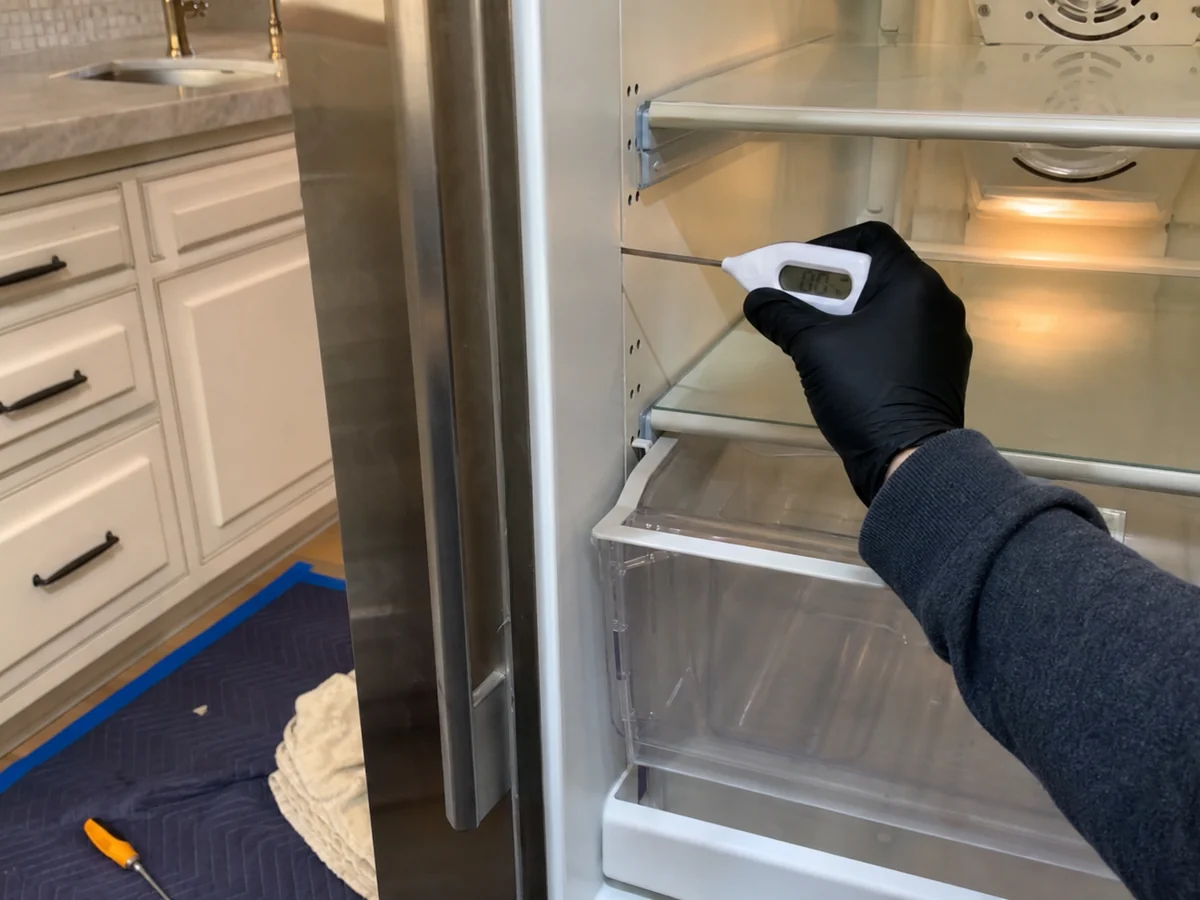
Note the actual fresh-food and freezer readings from the display or a separate thermometer.
Capture any alarm or code before changing settings or resetting.
Move perishable food to backup cooling if the fresh-food section is above about 40°F or climbing.
Confirm nothing blocks the doors, the lower grille or interior vents.
Write down when the symptom started; do not remove electrical panels or sealed-system covers.
Cost table
Planning ranges by failure pattern for Five Canyons and Castro Valley built-ins; airflow is checked before any compressor quote.
| Service / symptom | What's included | Castro Valley price range | Typical time |
|---|---|---|---|
| Fresh-food warm, freezer cold | Airflow, evaporator-fan, thermistor or gasket test and repair | $190–$620 | 1–3 hrs |
| Dirty condenser / hillside dust | Coil clean, fan check, temperature verification | $160–$320 | 1–2 hrs |
| Defrost fault | Heater, sensor or board test and repair | $280–$620 | 1–4 hrs |
| Both compartments warm | Condenser, control and compressor-path diagnosis | $235–$2,950 | 1–6 hrs + parts |
| Sealed system confirmed | EPA-sensitive leak/pressure work, recovery and charge | $690–$2,950 | 2–6 hrs + parts |
Hillside oak dust often makes a healthy system read warm, so condenser airflow is verified before a compressor is ever quoted.
Quick facts
Self-contained Castro Valley facts with explicit prices, temperatures and intervals.
Before dispatch
Use the phone link or online booking page when temperatures are rising.
Not-cooling FAQ
Answers for urgent cooling decisions and what to check first.
That pattern often points toward airflow, evaporator fan, thermistor, defrost behavior or a door-seal issue before compressor assumptions. In Five Canyons or other foothill homes, condenser dust and tight cabinetry can worsen the symptom. Record both temperatures and keep model details ready before resetting.
Check food safety first, then record fresh-food and freezer temperatures, photograph the display and confirm power, settings and door closure. Do not remove panels or touch electrical areas. Both compartments warm can involve condenser airflow, controls, compressor behavior or sealed-system evidence.
Yes. Restricted condenser airflow can raise operating stress and make a healthy system look weak. A cabinet-safe diagnostic should inspect the grille, condenser condition, fan operation and clearance before sealed-system conclusions. A wide cabinet photo helps decide whether access is part of the problem.
Move perishable food when temperatures are above safe storage range, rising quickly or uncertain. Food safety comes before preserving diagnostic evidence. After moving food, keep photos of the display, temperatures and symptom timing so the technician can still understand the failure pattern.
Usually no unless safety requires it or a technician instructs you. Repeated resets can erase alarm history and change frost patterns that matter for diagnosis. If you must power down because of food safety or water risk, write down the temperatures and time first.
No. Warm cabinet areas can reflect normal heat rejection, dirty condenser coils, fan trouble, tight cabinetry or system stress. Sealed-system work should follow verified airflow, electrical, temperature and frost-pattern evidence. Do not approve compressor work from that sign alone.